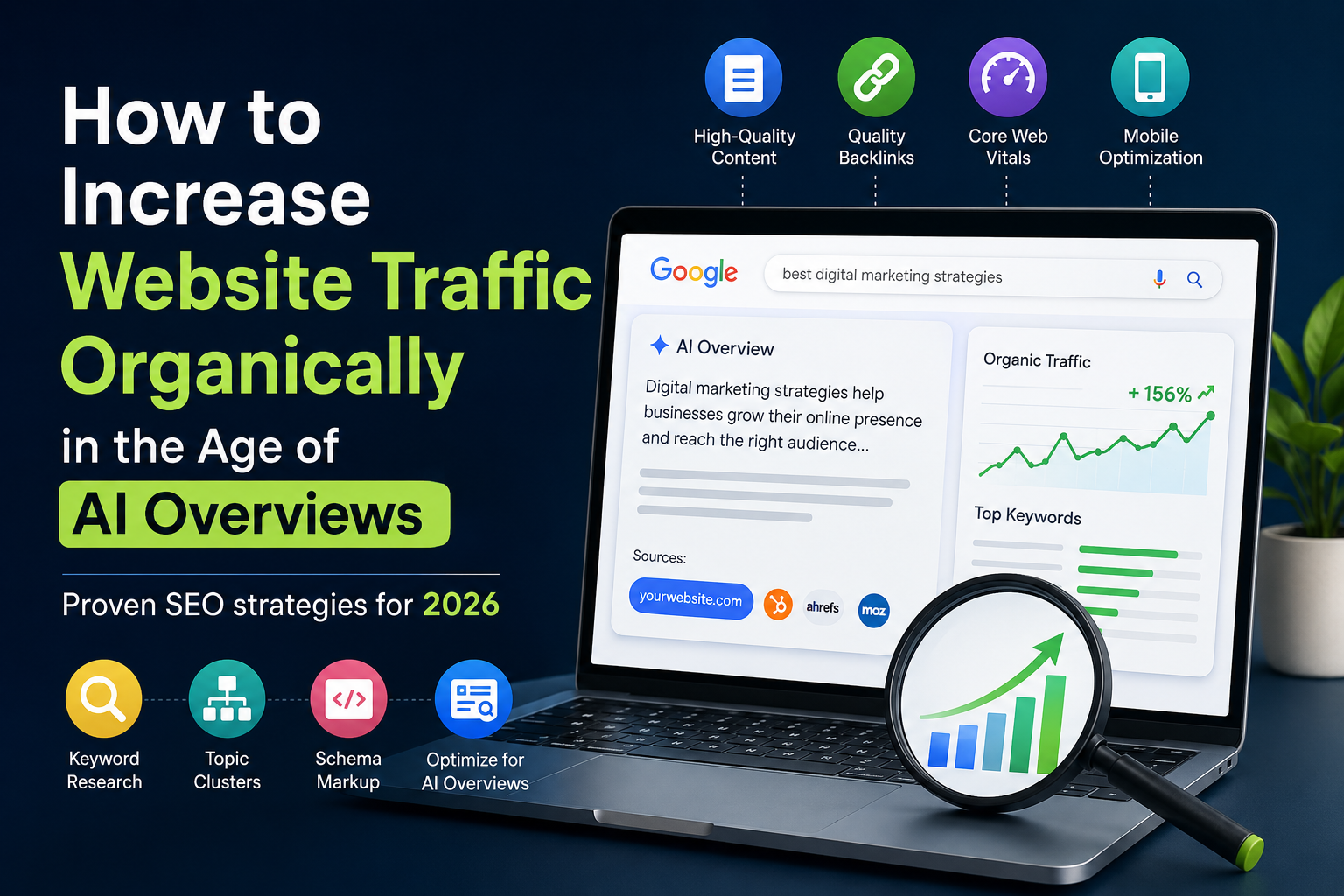
If you’re looking to increase your website traffic without relying on paid advertisements, focusing on organic methods is the way to go. Organic traffic refers to visitors who arrive at your site via unpaid search engine results. This method of growing traffic can be sustainable in the long run, providing high-quality visitors who are genuinely interested in your content. In this blog, we’ll explore 10 proven strategies that can help you boost your website traffic organically.
1. Optimize Your Website for Search Engines (SEO)
Search Engine Optimization (SEO) is essential for driving organic traffic. SEO ensures that your website is visible to search engines like Google, making it easier for users to find you.
Key tactics :
- Keyword Research: Identify the keywords your target audience is searching for. Use tools like Google Keyword Planner to discover the best keywords for your content.
- On-page SEO: Ensure that your website’s meta tags, headings, and content are optimized for your target keywords. This includes using keywords in your title tags, meta descriptions, and URL structures.
- Improve Site Speed: A slow-loading website can lead to higher bounce rates. Use tools like Google PageSpeed Insights to check and improve your site’s loading time.
2. Create High-Quality, Valuable Content
Content is the cornerstone of organic traffic. The more valuable and informative your content is, the more likely it is that users will find your site via search engines.
How to do it:
- Focus on providing answers to questions your audience is asking. Write content that addresses common problems, offers solutions, and provides value.
- Use a conversational tone and clear, concise language. Break your content into smaller paragraphs and use headings for easy navigation.
- Ensure your content is well-researched and offers fresh insights or perspectives.
3. Focus on Long-Tail Keywords
Long-tail keywords are longer, more specific search terms that tend to have lower competition and higher conversion rates. These keywords are essential for attracting niche audiences who are more likely to engage with your content.
How to do it:
- Identify long-tail keywords related to your industry or services. These keywords typically have lower search volume but higher intent.
- Use tools like Ubersuggest or Answer the Public to discover what long-tail keywords your target audience is searching for.
- Integrate these keywords naturally into your content, without overstuffing.
4. Build High-Quality Backlinks
Backlinks are one of the most important ranking factors for search engines. They act as votes of confidence from other websites, signaling that your content is authoritative and trustworthy.
How to do it:
- Reach out to relevant websites in your industry and request backlinks. Make sure to focus on high-quality, authoritative sites.
- Write guest posts on other websites, including links back to your own content.
- Create shareable content, such as infographics, that others are likely to link to.
5. Leverage Social Media Platforms
Social media platforms can help increase your website’s visibility and drive organic traffic. By sharing your content and engaging with your audience on social channels, you can attract more visitors to your website.
How to do it:
- Regularly share your blog posts, articles, or other content across social media platforms like Facebook, Twitter, Instagram, and LinkedIn.
- Use relevant hashtags to increase the discoverability of your posts.
- Engage with your audience by responding to comments, participating in conversations, and encouraging shares.
6. Enhance User Experience (UX)
A website that is user-friendly not only keeps visitors on your site but also encourages them to return. Google rewards websites that provide a positive user experience, including easy navigation, fast loading times, and mobile responsiveness.
How to do it:
- Make sure your website is mobile-friendly since a significant portion of users browse the internet on their phones.
- Improve your website’s navigation to make it easy for users to find what they’re looking for.
- Focus on creating a clean, visually appealing design that makes reading and browsing enjoyable.
7. Use Internal Linking Effectively
Internal linking refers to linking one page of your website to another. This helps both search engines and users discover more of your content.
How to do it:
- Use descriptive anchor text when creating internal links. This gives users and search engines a clear idea of the linked page’s content.0
- Link relevant blog posts or pages to enhance the user experience and guide them toward more useful content on your website.
- Avoid overusing internal links in a way that might disrupt the readability or flow of the content.
8. Utilize Google My Business (GMB)
For businesses with a local presence, Google My Business (GMB) is a powerful tool to increase visibility in local search results. It allows your business to show up on Google Maps and in local search results, which can directly drive more organic traffic.
How to do it:
- Create and optimize your Google My Business profile by adding your business name, address, phone number, website link, hours, and business categories.
- Encourage satisfied customers to leave reviews on your GMB listing to improve your credibility and ranking.
- Post regular updates, promotions, and offers through GMB to keep your audience engaged and attract more local traffic.
9. Publish Content Consistently
Consistency is key to building organic traffic. When you publish content regularly, you show search engines that your website is active, which can help improve your rankings.
How to do it:
- Set a content calendar and stick to it. Whether it’s once a week, bi-weekly, or monthly, regular content updates will help keep your website fresh.
- Repurpose content in different formats, such as turning blog posts into videos, infographics, or podcasts, to reach a wider audience.
- Monitor the performance of your content and create more of what works well.
10. Monitor Website Performance and Adjust Strategies
Tracking your website’s performance is essential to understanding what’s working and what needs improvement. Use analytics tools to measure traffic, user behavior, and other key metrics.
How to do it:
- Use Google Analytics to track organic traffic, bounce rates, and time spent on your site.
- Use Google Search Console to monitor keyword rankings and identify any potential technical issues that could affect your website’s visibility.
- Based on the data, make adjustments to your content strategy, SEO efforts, or user experience to continue improving traffic.
Conclusion
Increasing website traffic organically is not a quick fix—it takes time and effort. However, by focusing on SEO, creating valuable content, building high-quality backlinks, and enhancing user experience, you can achieve sustainable growth. By following these 10 proven strategies, you’ll attract more organic visitors to your website, build a strong online presence, and improve your search engine rankings over time.
Want to drive more organic traffic to your website? Let Altois help you with expert SEO strategies and digital marketing solutions. Contact us today to get started!