Think about the last time you looked for a home. You probably searched on Google, checked a few Instagram pages, watched a walkthrough video and then messaged someone on WhatsApp. Your buyers do the same.
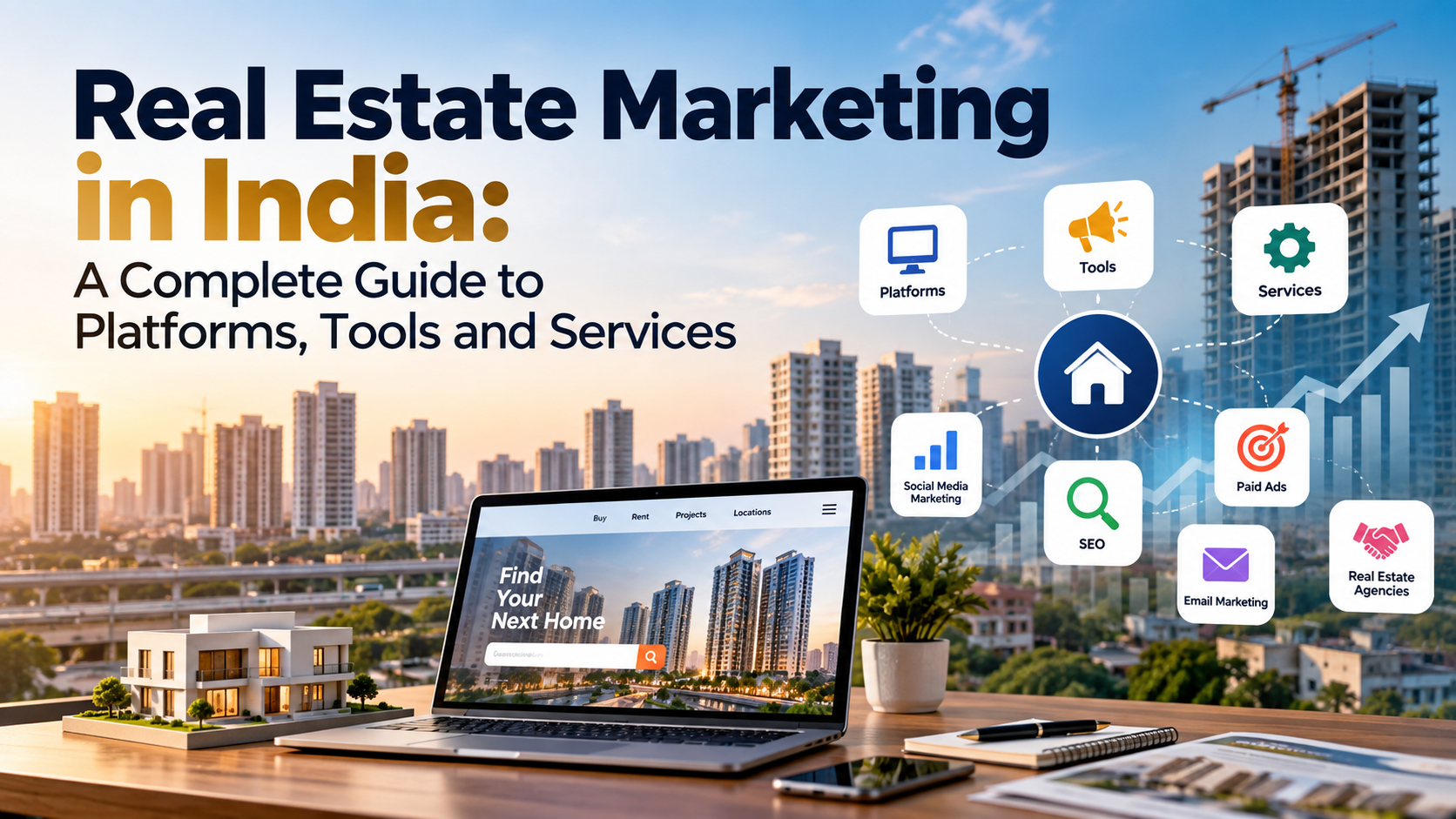
So real estate marketing in India now happens mostly online. Whether you run your own campaigns or work with a real estate marketing agency, the basics stay the same, and they’re simpler than most people think. This guide covers where to show up, how to run a campaign, which tools help, and how to find good people to work with.
Where Should You Market Your Property?
No single platform wins every time. But a few show up in almost every plan that works:
- Google Search and Maps: reaches people who are already looking, like “3 BHK flat in Thane”.
- Facebook and Instagram: good for launches, visuals and quick lead forms.
- Property portals: 99acres, MagicBricks and Housing.com bring serious browsers, but you compete with everyone else listed.
- YouTube: works well for walkthroughs and area tours.
- WhatsApp: the easiest way to send brochures and remind buyers about site visits.
- LinkedIn: helpful for NRIs, investors and commercial buyers.
Don’t try all six. Pick two or three and do them properly.
Which Ad Platforms Are Worth Your Money?
If you’re asking which online ads work best for real estate, it’s usually Google and Meta. They reach buyers at different moments.
| Platform | Works well for | Watch out for |
| Google Search Ads | Buyers ready to enquire | Clicks cost more in busy cities |
| Meta Ads | Launches, awareness, lead forms | Some leads are only browsing |
| YouTube Ads | Showing the project, remarketing | Needs good video |
| Portal listings | Ready-to-move and resale homes | Leads are shared with others |
Start with Google and Meta. Add more when your leads are steady. One more thing. Judge your ads by the cost of a qualified lead, not just any lead. A cheap lead who never visits the site isn’t cheap.
How to Run a Campaign That Brings Site Visits ?
A good campaign doesn’t need to be fancy. Here’s a simple way to build one online:
- Pick one goal. Aim for site visits, not just form fills.
- Know who you’re talking to. A first-time buyer, an investor and an NRI want different things.
- Build one focused landing page. Add the project name, configurations, location, photos, one form and your RERA number.
- Start with two platforms and a fixed budget. Spreading thin rarely works.
- Keep ads simple. Real photos, one offer, one clear call to action.
- Check results every week. Pause weak ads and put more money behind strong ones.
RERA rules in many states ask for the registration number in ads. Check the rules for your state.
Using Social Media the Right Way
Most people don’t buy on the first visit. They follow you, watch a few videos, start to trust you, and then call. So give them something worth watching:
- Short videos: site walkthroughs, sample flat tours, construction updates.
- Area guides: nearby schools, transport, hospitals and shops.
- Simple tips: home loan basics, what to check before buying, RERA explained.
- Real stories: short clips from happy buyers, plus festival offers and launch dates.
Post two to four times a week, tag your location, reply to DMs quickly, and end each post with a clear next step, like “Book a site visit”.
Getting More Leads Without Extra Work
You don’t need more tools to get more leads. You need a simple system that catches every enquiry and follows up fast.
- Instant lead forms on Meta and Google, so buyers type less.
- A short landing page with one form and one button.
- WhatsApp click-to-chat, so buyers can reach you in one tap.
- Auto-replies that send the brochure in seconds.
- A CRM that assigns each lead and reminds you to call.
- Retargeting ads for people who visited but didn’t enquire.
When a lead comes in, ask three quick things: budget, configuration and when they plan to buy. And call fast. If a buyer waits a day, they’ve probably moved on.
Tools That Make Life Easier
Here are the digital marketing tools most agents use, grouped by job. Tools change often, so check current features and pricing before you pay.
| Need | Popular options |
| Ads | Google Ads, Meta Ads Manager |
| Website and landing pages | WordPress, Wix |
| Tracking and reports | Google Analytics 4, Google Search Console |
| Design and video | Canva, CapCut |
| Messaging | WhatsApp Business |
| Email and SMS | Mailchimp, or your CRM’s built-in tools |
| Sales tracking | A property-focused CRM (see below) |
Choosing a CRM Your Team Will Actually Use
A CRM keeps every lead, call and site visit in one place. When you compare options, ask these questions first:
- Does it connect to Meta, Google, your website and property portals?
- Does it assign leads and remind your team to follow up?
- Can you schedule and track site visits?
- Can your team call and message from inside it?
- Do the reports show which source brings the best leads?
- Is it easy enough that your sales team will really use it?
- Is the price clear, and is there local support?
CRMs commonly used in India:
- Sell.Do: built for real estate developers and sales teams.
- LeadSquared: an India-based sales CRM used across many industries.
- Zoho CRM: flexible and budget-friendly.
- Salesforce: powerful and customisable, better for large teams.
- HubSpot: strong marketing tools built into the CRM.
- Pipedrive: simple pipeline view, good for small teams.
Solo agents should keep it simple and low-cost. Developer sales teams usually do better with a real estate CRM. Whatever you shortlist, book a demo and test it with your own leads.
Good Visuals: Virtual Tours and Photography
Good visuals get more enquiries, especially from NRIs and out-of-town buyers who can’t visit easily. Poor photos can lose a lead before you even speak to them.
Finding a virtual tour provider
- Search “virtual tour service in [your city]” on Google Maps and read the reviews.
- Ask other agents and builders who they use.
- Look at their real estate work, not just general projects.
- Ask what they offer: 360° tours, 3D walkthroughs, video, or 3D renders for projects still under construction.
Before you hire, check that the tour works well on mobile, can be added to your website and portals, and has a clear price, turnaround time and number of revisions.
Finding a real estate photographer Try Google Maps (“real estate photographer in [your city]”), referrals from local agents, and portfolios on Instagram or Behance. Then look for:
- Bright, straight interiors and well-timed exterior shots
- Drone shots, if your project needs them
- Quick editing and a clear delivery time
- Usage rights, so you can use the photos in ads and portals
Conclusion
Real estate marketing in India works best when you get the basics right. Choose two or three platforms and do them well, rather than spreading your effort across six. Keep each campaign simple, with one goal, one landing page and one clear call to action.Speed matters just as much. Instant lead forms, WhatsApp and a good CRM help you reply while the buyer is still interested. Start with the tools you really need, and add more only as your leads grow. Good photos and virtual tours also help, because they build trust before the first site visit.
You don’t need a big budget to begin. Pick one platform, set one goal and check your numbers every week. Keep what works, drop what doesn’t, and grow from there.